Naiads

Water: law/policy/politics/ethics/art/science


2 Comments

Spokane River Instream Flow Rule to be Launched

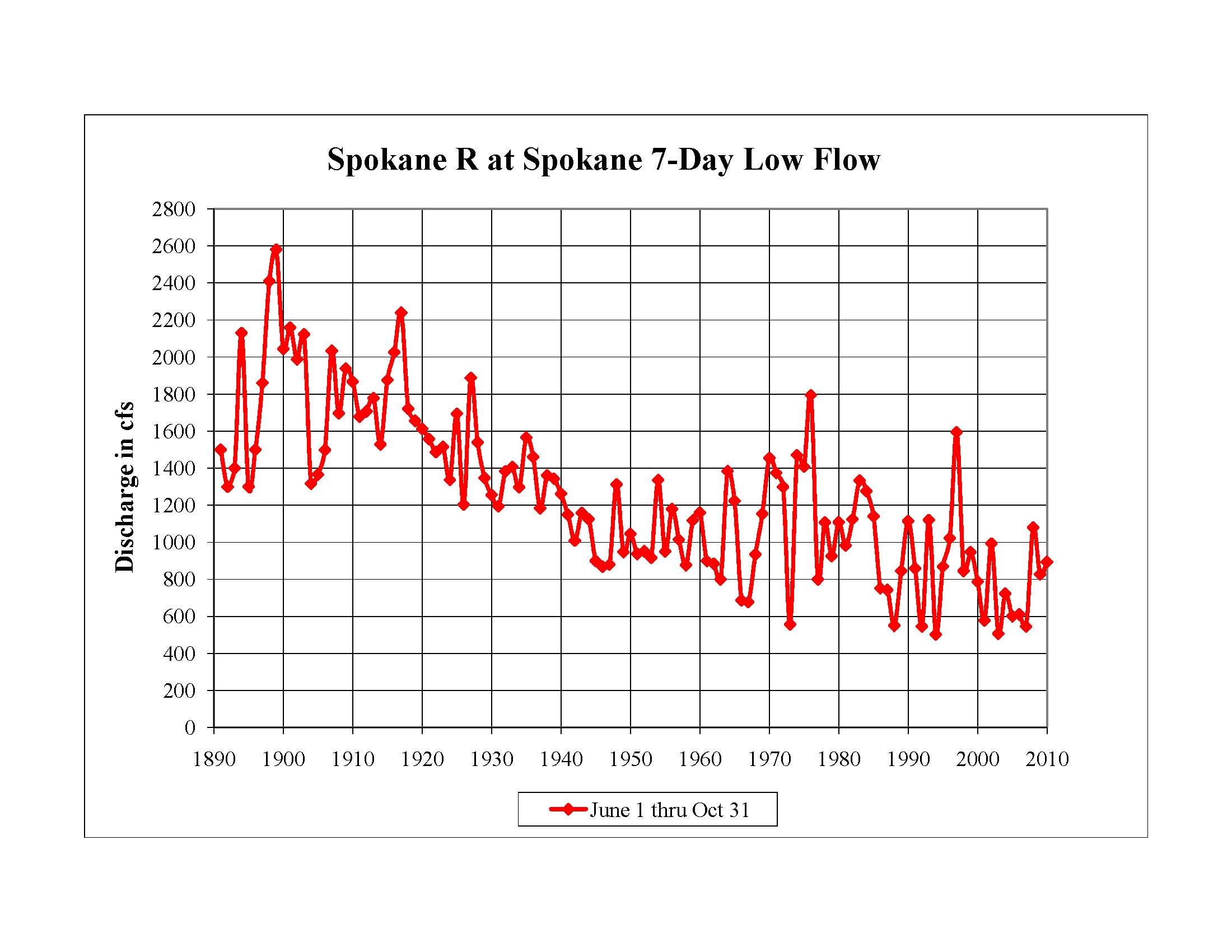
Spokane Low Flow (2010)

This graph shows the lowest flow of the year, every year between 1891 and 2010, as measured at the Spokane gage (just downstream of Monroe St. Bridge).

The Washington Department of Ecology announced today that it is launching an effort to protect instream flows in the Spokane River.   This is good news for river advocates, but must be taken with a dose of salt.

The Spokane River needs some help when it comes to instream flows, which have been steadily in decline for decades (see graph at right).   The problem is largely due to groundwater overpumping in both Washington and Idaho.  The Spokane Aquifer feeds the Spokane River, so pumping groundwater has a direct and negative impact on instream flows.

In Washington, river flows are protected by formal adoption of a rule that specifies how much water should be in the river during certain dates throughout the year (usually two week intervals).   These rule-based flows are basically a water right for the river.  Pre-existing water rights that were issued before adoption of the flow rule are not affected, and water rights issued after the flow rule are subject to curtailment when the flows are not met.   The system is not perfect, but it does provide a measure of protection against further degradation of rivers that lack sufficient water (such as the Spokane).

Ecology announced today that it will begin the formal rulemaking process, which should take about 18 months to complete, and will involve a fair amount of public process.
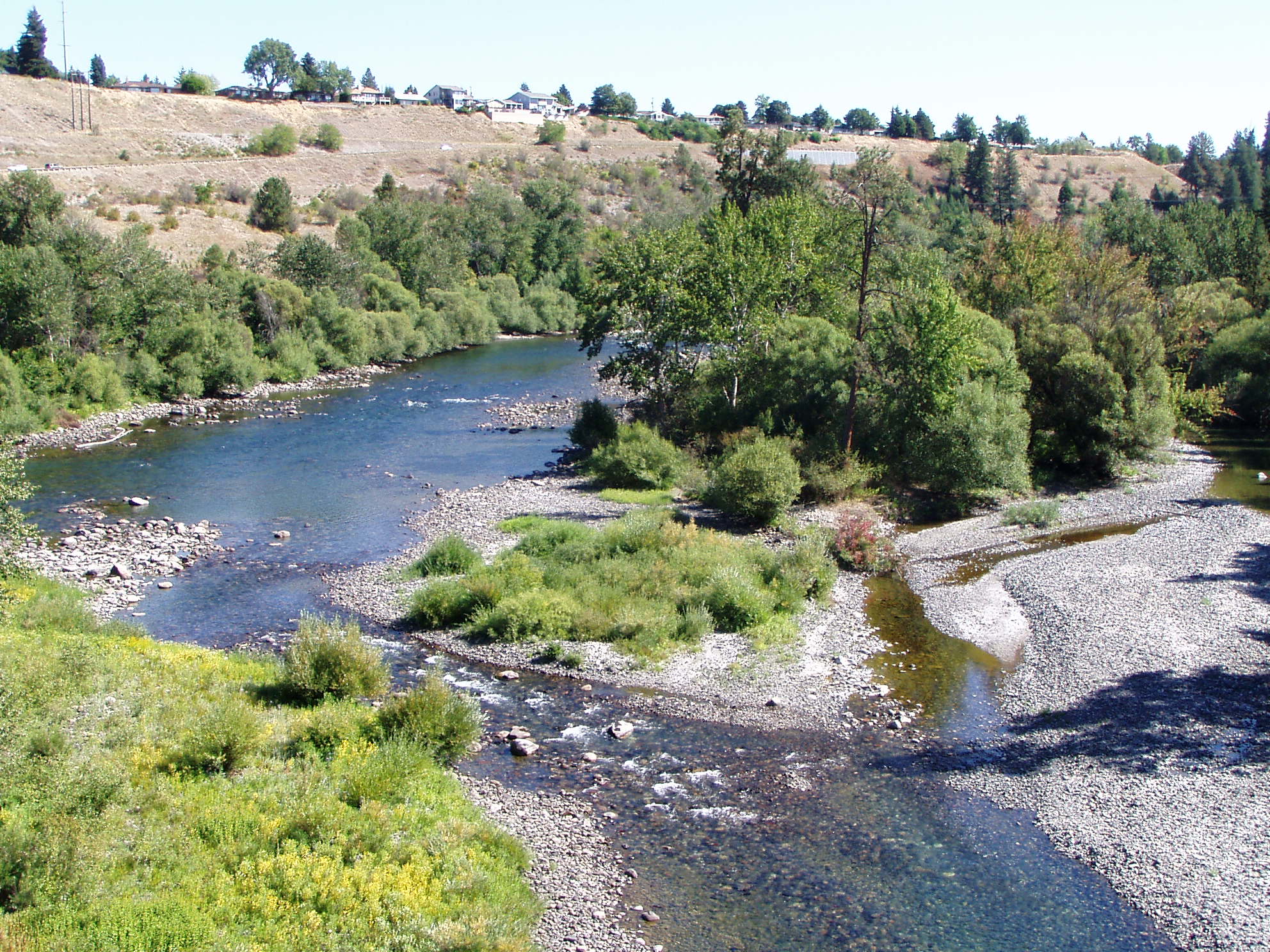
Spokane River 2003 low flows just above TJ Meenach Bridge

The purpose of instream flows is to protect public values in rivers.   For the Spokane, that means protecting water quality, fisheries, recreation, and scenic values.   An important question for Spokane River advocates to ask as this process unfolds:   Will the flows that Ecology proposes be sufficient to protect these values?

In a 2012 memo, and a 2013 presentation, Ecology stated that it intends to adopt a summertime flow of 850 cubic feet per second.  The Washington Department of Fish & Wildlife provided technical analysis.  But nowhere in the studies is there discussion of adequate flows for recreation and scenic values.   Alternative views about the amount of water that the Spokane River needs and other issues, submitted by the Center for Environmental Law & Policy, are set forth here.  (The back story is that the City of Spokane has proposed flows as low as 460 cfs, and Ecology believes it can split the baby).

Washington’s instream flow program got a big boost last October, when the state Supreme Court ruled that the Skagit River instream flow rule is designed to protect the river, and cannot be subordinated to water for future development.  (See Naiads post Skagit River Wins Big in Court (10-3-13)).

Despite the Skagit court decision, Ecology continues to issue new water rights that impinge on instream flows.   Litigation challenging Ecology is underway involving the Nisqually and Deschutes Rivers (issuance of new water right to City of Yelm, near Olympia), the Similkameen River (issuance of new water right for Enloe Dam, near Oroville), and the Columbia River (issuance of new water right to Kennewick Hospital, see Naiads post Washington Rivers: For Sale).

As the Spokane flow rule develops, those who care should closely question how this “water right for the river” will truly protect the river.

  • Will the flow rule really protect Spokane River water quality, fisheries, recreation, and scenic values?
  • Will the flow rule protect higher flows that occur some years, and provide important diversity in habitat and river channel maintenance?
  • Will the flow rule prevent issuance of future water rights to the detriment of the river?   (Of particular concern is the Department of Ecology’s obsession with obtaining new water for Columbia basin irrigation – the Spokane River is a potential source).
  • How will the Spokane River instream flow rule connect with new pumping on the Rathdrum Prairie in Idaho?

The coming year will present an important opportunity to advocate for the Spokane River.  Stay tuned.


2 Comments

Airplanes vs. Fish: Boeing Seeks Special Laws to Pollute

Biomagnification of Mercury up the Food Chain

Biomagnification of Mercury up the Food Chain
(National Park Service graphic)

What do the Spokane River and a Boeing 777 have in common?   A lot of toxic pollution, and that’s not a joke.

Washington Governor Jay Inslee just announced a special legislative session (starting Thursday, November 7) with the goal of keeping Boeing’s 777X airplane manufacturing business in Washington.  The governor wants a special package that will persuade Boeing from moving on to a friendlier tax and transportation state.Some of the package makes sense.  Investment in infrastructure to reduce Puget Sound freeway gridlock, workforce education, and tax incentives all connect to the goal. But the package also includes a “human health and water quality” element that will undermine proposed updates to water quality laws that are supposed to protect the health of the many Washingtonians who eat fish.

Notwithstanding the bureaucratese, the message is clear:  clean rivers are not as important as jobs.  Unfortunately, this formulation does not account for the benefits of clean water to the economy, and the costs to public health of toxic rivers.

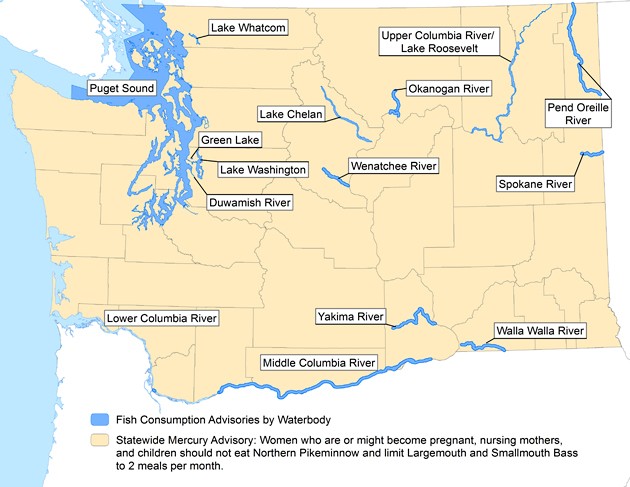
WA DOH Statewide Fish Consumption Advisories Map (11-5-13)

Statewide Fish Consumption Advisories
(WA Dept of Health 11-5-13)

The problem in a nutshell:  Washington’s water quality laws are based on calculations of how much fish is safe to eat from polluted waters.  Many state rivers are polluted to the point that fish consumption is unhealthy.  For example, people who eat fish from the Columbia River and its tributaries (once home to some of the most abundant fisheries on earth) are now reading public health advisories posted at their long-time fishing spots.

The more fish you eat, the greater your toxic exposure.   This affects a lot of people in Washington, including Native Americans (who have dietary traditions going back thousands of years), along with a lot of non-tribal citizens who appreciate the abundance of our fresh and marine waters.   But, contrary to practical knowledge, the current standards assume people eat only 6.5 grams of fish per day, or about 8 ounces per month.

6.5 grams

From left to right, 6.5, 54, 157 and 250 grams of fish
(Photo: Heather Trim)

It’s an environmental justice issue, as Prof. Catherine O’Neill of Seattle University Law School documents in a recent blog post.  And, the current assumptions are just plain wrong.  Calculating water quality standards based on “just one fish meal per month grossly understates contemporary consumption rates.”

Given the inaccurate baseline for fish consumption quantities, the Department of Ecology began to update the standards a few years ago.   But along the way, Boeing, Inland Empire Paper (in Spokane) and other polluting industries demanded that Ecology slow or halt the revision process.   It is true that updated standards would impose stricter limits on the amount of pollution these industries are allowed to pipe into state rivers.   It is also a fact that the new standards would be based on what is needed to protect public health.

Boeing’s lobbying efforts succeeded – its intervention stalled the update process.   In March 2013, Seattle-based InvestigateWest published a riveting account of Boeing’s influence over the governor’s office:  “Boeing Interests Trump Health Concerns in Fish Consumption Fight.”

State efforts to dodge accountability are impressive.  Ecology convened a “stacked deck” advisory group, but environmental groups and Tribes boycotted.  Boeing went to the governor’s office, and got the delay it wanted.  Legislative skirmishes ensued in 2012 and 2013.  Public interest law firm Earthjustice filed suit on October 11, challenging the U.S. Environmental Protection Agency’s failure to step in when Washington failed to adopt standards that protect public health.

Janette Brimmer, Earthjustice attorney, puts it succintly:  “EPA’s inaction continues to allow polluters to discharge mercury, PCBs, lead and other toxins at levels that contaminate fish, pollute our waters, and threaten public health.  Everyone agrees Washington’s fish consumption rate and human health standards are under-protective. We can’t allow EPA to continue kicking the clean water can down the road.”

Ecology’s public information meetings continue to whitewash the problem.  If and when Ecology does adopt standards that protect public health, it has announced it will also adopt various loopholes that could allow polluters to delay compliance for decades.   At his press briefing, Gov. Inslee indicated that there would be no legislation on this issue, raising concerns that a backroom deal may have been struck.

Boeing Renton facility

Why does Boeing care about fish consumption rates to the point that this is part of Governor Inslee’s package?  According to Ecology’s permit website, Boeing holds more than a dozen pollution permits for its industrial facilities in Everett, Renton and Auburn.

These permits allow the company to discharge polluted stormwater into Puget Sound and air pollutants that inevitably return to earth.  Link here to view Boeing’s water pollution permits (type “Boeing” into the “Facility/Project” tab, then click on “search”).  And here for air pollution permits.

Apparently, airplane manufacturing causes a lot of pollution.  When it rains, that pollution runs off of Boeing’s industrial tarmacs and into Washington state waterways.

Native American leader Billy Frank Jr. sensibly suggests in his November Being Frank column that Boeing needs to join the larger community in a discussion about how to solve this Gordian knot.  “We don’t want Boeing to leave the state or go out of business. We want them to keep making planes here in western Washington, but at the same time we have to protect the health of everyone who lives here by adopting a more realistic fish consumption rate.”

So far, it’s “my way or the skyway” with Boeing planes pitted against clean water and healthy fish.  Unfortunately, I can’t serve a 777X at my dinner table.


Leave a comment

Washington Rivers: For Sale

For Sale: Washington’s rivers and streams
(map: Dept of Ecology)

Okanogan Wilderness League has filed an appeal of a new water right decision, challenging the Washington Department of Ecology’s authority to issue water rights from the Columbia River that are not conditioned on maintaining instream flows.  The appeal also challenges Ecology’s use of “out-of-kind” mitigation that allows the user to pay into a state fund for habitat restoration projects instead of curtailing pumping when river flows are too low.  The price?  $35.00 for every 325,000 gallons sold, er, pumped.

Link here for OWL’s press release regarding its appeal.

New water rights are hard to come by in Washington State.  Most of the state’s rivers and aquifers are over-allocated, particularly during summer months when water demand is high, but rivers are over-heated and lack adequate flows to support healthy fisheries.

These days, almost all new water rights involve purchase and transfer of existing rights, trust water rights, water banking, or other “water-for-water” offsets.   However, in February 2013, the Department of Ecology adopted a water right mitigation policy authorizing itself to issue new water rights based on “out-of-kind” mitigation – that is, a water user can restore habitat or simply pay money in order to get a new water right.

At first blush, habitat restoration is an appealing concept.  Why not restore a wetland, or stabilize a shoreline, or put some logs in a river if it helps aquatic habitat?  The problem is that water is irreplaceable – insufficient quantities of water in a river present a unique problem that usually cannot be fixed by restoring another part of the ecosystem.

The other problem is that would-be water users are very happy to pay into a fund to obtain a water right that will last forever.   Water, after all, is far more valuable than money.

On September 30, 2013, the Department of Ecology issued a large new water right to Kennewick Hospital, now known as Trios Health.  Trios was bequeathed property south of the Tri-Cities, on the Columbia River, and wants to convert it to irrigated land and sell it.  The buyer is Easterday Farms, a large corporate agricultural outfit.  (Easterday Farms is the vegetable growing arm of the family business that also runs Easterday Ranches, owner of massive cattle feedlots in eastern Washington.  More on them at a later date.)

New, unmitigated water rights cannot be had from the Columbia River.   New rights must be conditioned with instream flows or offset with water from another source.  Notwithstanding this rule (discussed in the 10-3-13 Naiads post re the Skagit River court decision), Ecology issued the new right requiring only that Trios pay $35 per acre foot per year into a state fund, up to a maximum of $6 million over a 40-year period in exchange for a water right that will last forever.   Ecology will use these funds to pay for about a dozen habitat restoration projects in the Yakima, Snake and Walla Walla River basins.

The Trios water right is the first unmitigated, non-interruptible water right to issue for Columbia River waters since salmon were listed under the Endangered Species Act.  Ecology claims that this is a unique situation and a rare use of the out-of-kind mitigation policy.  But at least two other recent, large water rights have been issued that rely on off-site habitat restoration as a basis for issuing the right (the City of Olympia/Lacey/Yelm water right package and the Okanogan PUD right for the Enloe dam project on the Similkameen River).

$35 per acre foot equates to $1.00 for every 9,300 gallons of water used.  The public’s water resources have not only been sold, but at a bargain basement rate.

It appears that Washington’s waterways are now officially for sale.


4 Comments

Return Salmon to Upper Columbia River

October 27, 2013

Opinion: Include salmon, climate provisions in river treaty

John Osborn And Suzanne Skinner
 These falls are that place where ghosts of salmon jump, where ghosts of women mourn their children who will never find their way back home.

From “The Place where the Ghosts of Salmon Jump,” by Sherman Alexie (inscribed at the Spokane Falls overlook).

Canada and the United States are preparing to renegotiate the Columbia River Treaty. The treaty, first signed in 1961, governs management of the Columbia, once the richest salmon river on Earth, but now converted by dams into the world’s largest integrated hydropower system.

Reconsideration of the treaty will profoundly impact the future economies, environment and quality of life of people on both sides of the border. That’s why last August, thousands of Pacific Northwest citizens wrote to urge the federal government to include ecosystem restoration as a core component of a renegotiated treaty. They also called for opening the Upper Columbia Basin to the salmon that once thrived above Grand Coulee Dam, including in the Spokane River.

The federal government listened.

The current U.S. position recommends the U.S. State Department make managing the health and environment of the Columbia watershed a central purpose of a modernized treaty – as important as power generation and flood control. This is a wise and farsighted recommendation that will not only enhance the lives and economies of future generations in the Columbia basin, but also provide some recompense to the Columbia River tribes whose economies, culture and spirituality remains intertwined with salmon despite terrible damage wrought by dams.

Managing the Columbia for its environmental health must mean more than current efforts to comply with the Endangered Species Act. Current recovery efforts fail to meet the life-cycle needs of the Northwest’s most iconic species. Most wild populations are maintaining or declining, despite coming under the protection of the act between 14 and 22 years ago. Present management of Columbia dams remains unsustainable for salmon and other native species.

Climate change is also aggravating existing river-management challenges. This summer, temperatures from McNary Dam to Bonneville Dam on the Columbia were 70 degrees or above for 41 straight days, and for 56 straight days in the middle and longest part of that reach. This previews coming years, when this year’s highest temperature, 73.2 degrees at John Day Dam on Sept. 11, will be a new norm that portends an unhealthy river pushing salmon to extinction.

Washington will suffer impacts of climate change more acutely than British Columbia. In the decades ahead, as much as 60 percent of summer flows in the Columbia will come from our neighbor to the north. We must renegotiate the treaty to include ecosystem restoration so that our two nations have a framework to respond effectively to climate changes already unfolding in the basin.

Northwest utilities currently oppose adding “ecosystem” and “environment” to the treaty, even seeking to terminate the treaty if they don’t get their way. We believe this position overlooks that, for today’s Northwest, ecosystem function is economic function. Both Northwest power production and flood risk management will improve with ecosystem function as the treaty’s third purpose. So will other river-based economic sectors, including salmon. All economic activities in the Columbia River Basin will be damaged by the hotter, unhealthier waters that climate change is creating. All will benefit by urgent, creative bilateral responses.

Indeed, a much-needed creative response that would benefit both the U.S. and Canada is to jointly plan how to open up miles of habitat now closed to salmon in British Columbia and the U.S., including the Spokane River.

We do not have to settle for ghost fish. Restoring the ecosystem of the Columbia holds the promise of healthy salmon returning to the headwaters and someday jumping once again at Spokane Falls.

Decisions made now will have an enormous impact on our region’s economy, environment, and quality of life for the next 50 years.

Help restore the Columbia to health.

Help bring the salmon home.

Help make restoring the Columbia’s ecosystem a core purpose of a modernized Columbia River Treaty.

John Osborn, M.D., Columbia River Future Project, Sierra Club

Suzanne Skinner, executive director of the Center for Environmental Law and Policy


Leave a comment

Columbia Canoe Journey Nearly Home

Columbia Lake (headwaters of the Columbia River, flowing north) and the Kootenay River (flowing south), pass within a mile near Canal Flats, B.C. (www.canmaps.com)

The Columbia Canoe Journey, Sea2Source, will arrive in Canal Flats, B.C.,  on Monday, October 28.  The intrepid paddlers have traveled 1240 miles from the Pacific Ocean to the uppermost headwaters of the Columbia River, bringing a message of restoration:  return salmon above the dams to their ancestral waters.

Canal Flats is an extraordinary spot in the geography of the Columbia Basin.  The upper Kootenay River passes by only one mile away from the Columbia, but the watersheds are separate.  The two rivers do not meet until after flowing for hundreds of miles in different directions.

The Sea2Source canoe journey has published a new video, which can be viewed on their Facebook page, Voyages of Rediscovery.


Leave a comment

Cow Pie Water Wars Continue

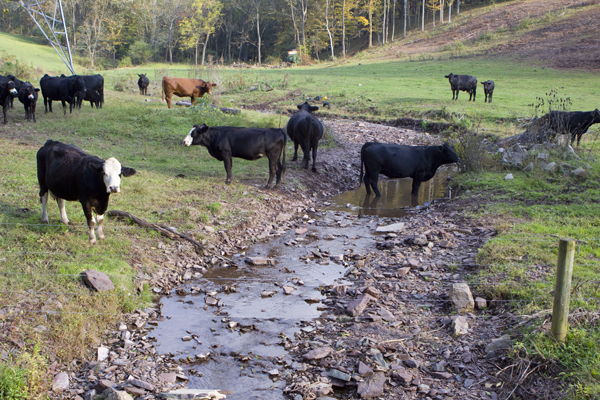
Cattle in Streams (WolfeNotes.com).docx

wolfenotes.com

Washington State ranchers are threatening to go the Legislature in 2014 to defend their “right” to pollute state waterways.

It has long been understood that cows pollute.  A lot.  A mature cow produces between 120 to 150 pounds of manure, etc. each day.  And where the cow has access to a stream, it will cause all kinds of problems, including pathogenic pollution that is harmful to humans and aquatic life.   Cattle trample stream beds and banks, causing erosion and destroying riparian vegetation.

The U.S. Environmental Protection Agency lists livestock manure as one of the last major uncontrolled sources of contaminants in the United States. (See charts at the end of this article).

On August 15, 2013, the Washington Supreme Court ruled that the state water pollution agency does have authority to order cows out of streams to protect water quality and aquatic habitat.  In Lemire v. Department of Ecology, the Court held that the state water pollution act is stronger than the federal Clean Water Act, and authorizes enforcement against ranching operations that pollute public waterways.

According to an article in the Oct. 12, 2013 Spokesman-Review, representatives of the agricultural community are now asserting that they intend to try to change the law, rather than clean up state streams.

Washington has a number of laws and programs to assist ranchers to get their cattle out of state waterways.   State policy allows ranchers to divert water to stock tanks, without a water right, to make sure their cattle have water.  For better or worse, ranchers are allowed to pump unlimited use of groundwater with a permit.  Any argument that ranchers must have access to streams in order to provide water their cattle is simply not true.

The Washington State Conservation Commission  offers several programs to help farmers protect streams.  The Voluntary Stewardship Program provides financial incentives for ranchers and farmers to protect streamside areas in lieu of Growth Management Act critical areas ordinances – a controversial step back from growth planning that was adopted to satisfy the agricultural community.

CREP buffers in Whatcom County (Photo: Washington Conservation Commission)

The Conservation Reserve Enhancement Program (CREP) is a joint state-federal funding program that pays ranchers to restore riparian habitat and create no-cow zones along streams.   The program results are phenomenal, including more than 1,000 projects in Washington, 735 miles of streams protected, 5.2 million native trees and shrubs planted, and 1.5 million feet of fencing.  At no cost to the landowner.

21st century environmental management has moved on from the 19th century mentality that a landowner can do anything he or she wants with her property.   There’s an ancient Latin expression – “sic utere tuo ut alienum non laedus” – which roughly translates to mean that a person’s right to use their property does not include the right to injure the property of others.  (It’s also been described as “your right to swing your fist ends at my nose.”)

Perhaps most important, Washington’s waters are owned by the public. No one has the right to pollute the commons.   This is a principle that should not – and indeed cannot – be legislated away.

————————————————–

From EPA’s Animal Feeding Operation Website:

Table 1 Reference: National Water Quality Inventory: 1998 Report to Congress (EPA, 2000a). AFOs are a subset of the agriculture category. Summaries of impairment by other sources are not presented here.

Table 1. Summary of U.S. Water Quality Impairment Survey
Total Quantity in US Amount of Waters Surveyed Quantity Impaired by All Sources Quantity Impaired by Agriculture
Rivers             3,662,255 miles 23% of total 840,402 miles 36% of surveyed 248,028 miles 59% of impaired 170,750 miles
Lakes, Ponds, and Reservoirs             41,600,000 acres 42% of total       17,400,000 acres 39% of surveyed 6,541,060 acres 31% of impaired 2,417,801 acres
Estuaries             90,500 square miles 32% of total 28,889 sq. miles 38% of surveyed 11,025 sq.miles 15% of impaired 1,827 sq. miles
Table 2. Five Leading Pollutants Causing Water Quality Impairment in the U.S. (Percent of incidence of each pollutant is shown in parentheses, e.g.,  siltation is listed as a cause of impairment in 38% of impaired river miles.)
Rank Rivers Lakes Estuaries
1 Siltation (38%) Nutrients (44%) Pathogens (47%)
2 Pathogens (36%) Metals (27%) Oxygen-Depleting Substances (42%)
3 Nutrients (29%) Siltation (15%) Metals (23%)
4 Oxygen-Depleting Substances (23%) Oxygen-Depleting Substances (14%) Nutrients (23%)
5 Metals (21%) Suspended Solids (10%) Thermal Modifications (18%)


1 Comment

Columbia Paddlers Make Canada

Sea2Source Expedition heads into Canada (photo: Adam Wicks-Arshack)

The Sea2Source Canoe Journey arrived in Castlegar, British Columbia yesterday, and sets out today for a long voyage up the Arrow Lakes.

Castegar News described their arrival in B.C., accompanied by Sinixt Native paddlers.

“Right now everything’s coming together so well with the Columbia River Treaty,” related Adam Wicks-Arshack. “It’s really the perfect time to start getting the public going. Because there’s a lot of stuff going on behind closed doors with politicians, but we need the public to start pushing, making their voice heard that we want the salmon back.”

“We’ve talked to thousands of people,” Wicks-Arshack elaborated. “Nobody is against having salmon… everyone wants the salmon back.”

Link here for the Castlegar News full story.

You can follow the Sea2Source Columbia Canoe Journey on Facebook.


Leave a comment

Skagit River Wins in Court

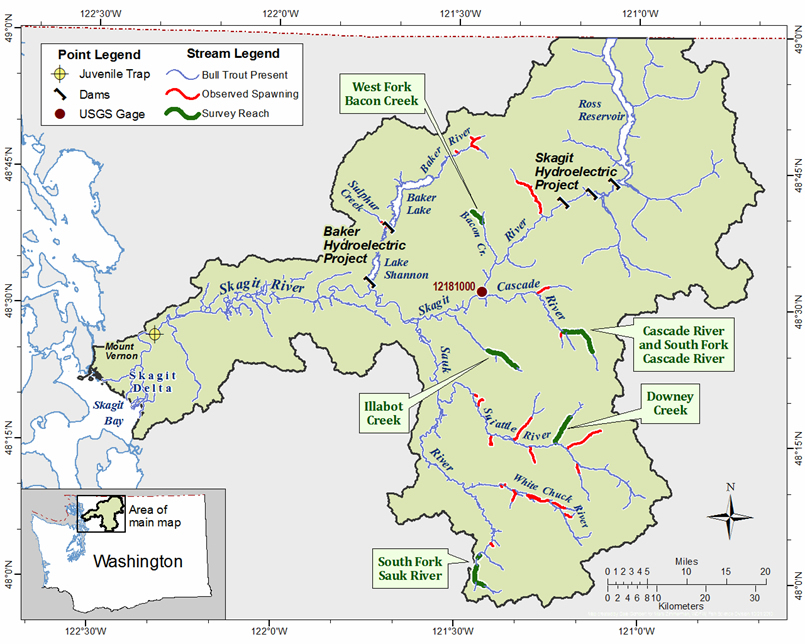
Skagit River basin map (USFWS 2013). This map shows just a handful of the thousands of tributaries that support Skagit salmon runs.

Here’s a good question:

“How does one put a dollar value on being in the presence of crystal clear water coursing down a steep slope through a rock-lined, moss-edged stream bed among evergreen trees, for example?  While commercial uses of the state’s instream flows might be made — tourism and paid-for recreation, for example — such uses do not entail the total benefits derived from streams and lakes.”

The Washington State Supreme Court posed this question today in its decision ruling in favor of Washington’s rivers.  At issue was whether the instream flows set by rule for the Skagit River and tributaries may be annulled in favor of development for rural housing and other uses.   The Court said ‘no’ – these instream flow rules are “water rights for the river,” and can only be revoked under narrow circumstances.

The ruling affects not only the Skagit, but several other rivers in for which recently adopted instream flow rules create development ‘reserves,’ including the Stillaguamish, Quilcene-Snow, Salmon-Washougal, Lewis, Wenatchee, and Entiat Rivers.  The ruling will also affect Ecology’s issuance of individual water rights that supercede instream flows without substantial justification.

Over time Washington’s water laws, which historically favored diversion of water for out-of-stream uses, have evolved.  In 1917, when the state Water Code was first enacted, the goal was headlong water development for irrigation, public water supply, industrial and other out-of-stream uses.

Starting in 1969, Washington water policy began to change.  The Legislature enacted a minimum instream flow program that creates instream flows (water rights for rivers) to protect aquatic habitat, recreation, navigation, water quality, and other instream uses.   As the Court noted in today’s decision, the goals have changed from helter-skelter development to focus on prudent water management, preservation of water in streams and lakes to protect public values, and avoidance of wasteful practices.

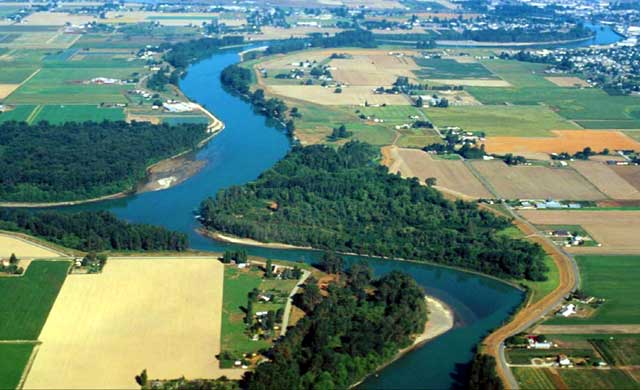
Skagit Forks – the last remaining stand of riparian forest on the lower Skagit River (WA Wildlife & Recreation Coalition)

The Skagit River is a big river, but many tributaries to the Skagit are water-stressed due to rural development and climate change impacts.   These tributaries provide important habitat for salmon spawning and rearing and indeed the Skagit is the only river in Washington that supports all six species of salmon and steelhead.

The Washington Department of Ecology adopted instream flows for the Skagit River and its tributaries, but then created “reserves” that allocate 2% of these instream water rights for out-of-stream use.    As a legal basis for these reserves, Ecology relied on a statutory exception called OCPI – “overriding considerations of the public interest.”

The Court rejected Ecology’s interpretation of the OCPI for two reasons.  First, instream flow rights are like any other water right, and exceptions that allow infringement of these rights must be very narrow.  Ecology’s broad program of “reserves” for future growth is a not a narrow approach.

Second, the Court rejected Ecology’s argument that it could use OCPI to grant new water rights that otherwise could not be obtained.   The Court found that the benefits of instream  flows are not just quantified in dollar terms, but in public values that transcend monetary quantification.  See quote above.

The decision in Swinomish Indian Tribal Community v. Ecology is a big win for rivers and people who love rivers and/or depend on them for their livelihood and culture.


Leave a comment

Columbia Treaty Hearings to Be Held in Spokane, Boise

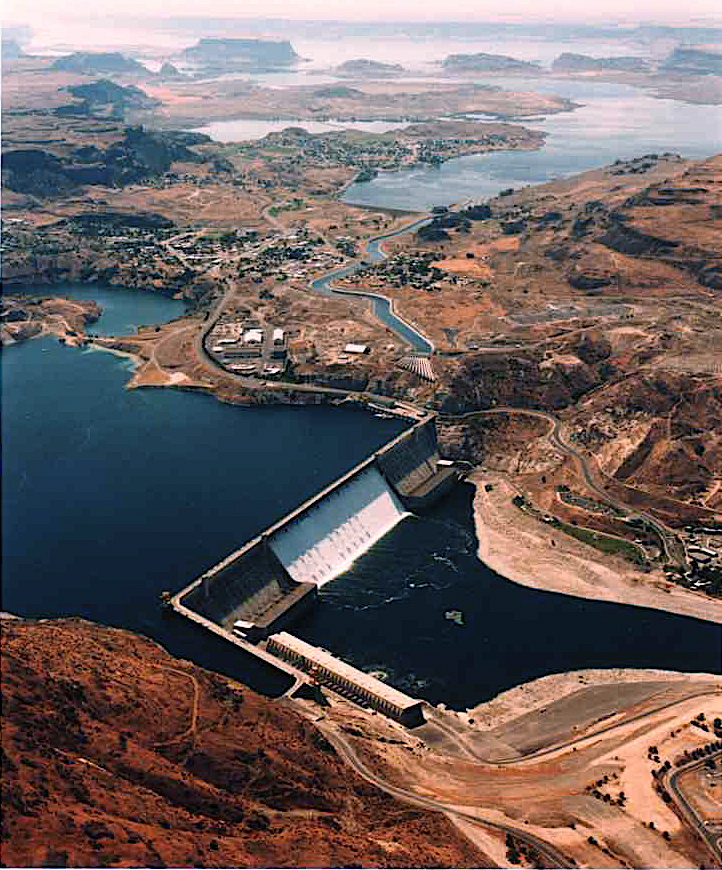
Grand Coulee Dam (photo: U.S. Bureau of Reclamation)

Grand Coulee Dam (photo: U.S. Bureau of Reclamation)

Notwithstanding the U.S. government shutdown, Bonneville Power and the Army Corps of Engineers will hold public hearings on Columbia River Treaty review in Spokane on Wednesday, October 2 (at the downtown Spokane Public Library, 906 W. Main St.) and in Boise on Thursday, October 3 (at the Boise Public Library, 715 S. Capital Blvd.).

The hearings will be held from 1:00 to 3:00 pm in each location.

The agencies will be taking comments on the draft recommendations to the Department of State regarding what a modernized Treaty will look like.  Link here for the draft recommendations.   And link here for the public hearing announcement.

Parties interested in how the Treaty may be used to restore the Columbia River should consider providing the following messages at the meetings, or via www.bpa.gov/comment (or call 800-622-4519):

(1) Adding ecosystem function and restoration as a co-equal purpose of the treaty is good.  Thank you US Entity and the agencies and tribes who have worked hard to recommend this new purpose for the Treaty.

(2) Adding fish passage at Columbia system dams is good.  Salmon must be, and can be, restored to their ancestral grounds.  Let’s do it.

(3) Modernize flood control.  Fewer levees, more flood plain connections, practical solutions such as not building in the flood plain can create flexibility for upstream water storage.

(4) Recognize B.C.’s contribution to power generation, safety and ecological well-being in the U.S.  Let’s negotiate in good faith.


1 Comment

Bon Voyage Columbia Canoe Journey

The Columbia Canoe journey is shoving off tomorrow, Monday September 30th, leaving Kettle Falls and paddling toward the international border and into British Columbia. They’ve built a beautiful new cedar plank canoe in the “David Thompson” style.

 
New cedar plank canoe headed to B.C. (photo: Adam Wicks-Arshack 2013)


The canoeists are bringing attention to lack of fish passage on the Columbia River and how that’s affecting upper Columbia people, tribes, cultures and ecology in both Canada and the U.S.

Yesterday they got a big welcome in Canada via an article in the Globe & Mail that shows the connections between their journey and the upcoming renegotiation of the Columbia River Treaty.  Link to the article here.

The original canoeists will be joined by Sinixt paddlers as they head into Canada.  The Sinixt are a transboundary indigenous peoples, recognized as one of the 14 Bands of the Confederated Colville Tribes, but (unjustly) declared “extinct” in British Columbia.  You can follow their journey at the Voyages of Rediscovery Facebook page.

Fair sailing, John, Xander, Adam, Jay and all who join you!